

Advertisement
The Significance of Pongal: Gratitude to Farmers and Mother Earth
Why Pongal Is Celebrated In India: Know The Festival Significance: Indian festivals are more than religious rituals—they reflect our connection with nature, agriculture, and human labor. Pongal, one of the most celebrated festivals in Tamil Nadu, exemplifies this beautifully. Observed from January 14th to 17th, Pongal marks the Sun’s entry into Capricorn and the arrival of the new harvest.
Why Pongal Is Celebrated
- The word “Pongal” comes from the Tamil word pongu, meaning to boil or overflow.
- It celebrates the new harvest, thanking the Sun God, Mother Earth, and livestock.
- The festival highlights agricultural culture and honors the hard work of farmers who provide food.
The Four Days of Pongal and Their Significance
- Bhogi Pongal: Marks the departure of the old. People burn old clothes and items to symbolize a fresh start. Homes are cleaned, and rangoli (kolam) designs are drawn.
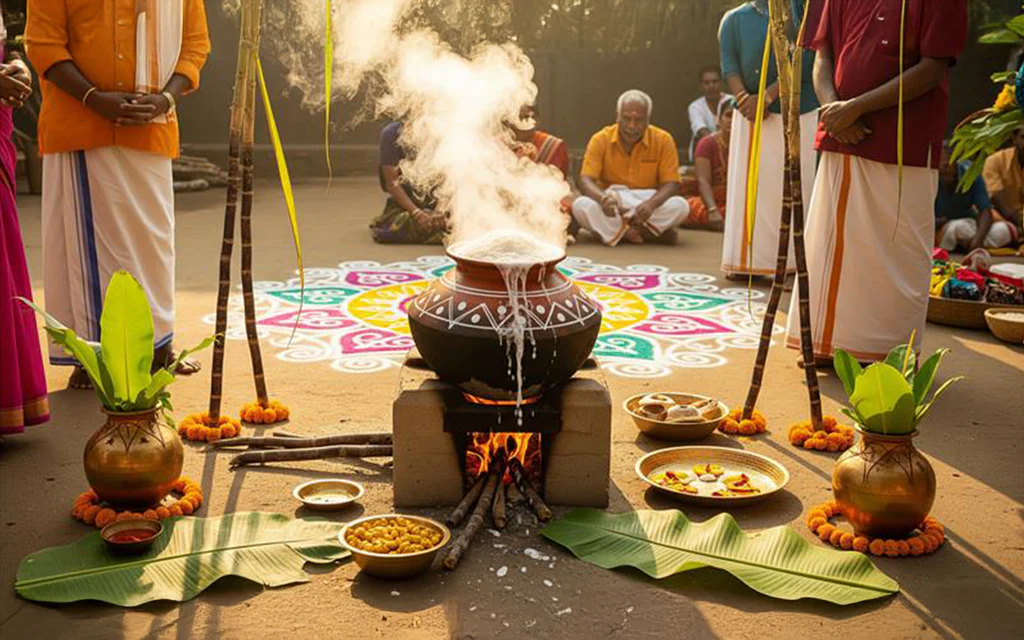
- Surya Pongal: The main day of celebration. Rice and milk are cooked in earthen pots in open courtyards. When the milk boils over, it’s called “Pongalo Pongal”, a symbol of abundance.
- Mattu Pongal: Dedicated to cows and bulls, this day honors the animals that support agriculture. Livestock are bathed, decorated, and worshipped.
- Kannum Pongal: A day for family and social gatherings, visiting relatives, picnics, and celebrating with folk songs and dances.
How Pongal Is Celebrated
- Kolam (rangoli) is drawn outside homes.
- Dishes from the new harvest, like the traditional Pongal made of rice, milk, and jaggery, are prepared and shared.
- People wear traditional clothes.
- Folk dances, songs, and fairs are organized in communities.
The Cultural and Moral Significance
- Pongal reminds us that food comes from the farm, not just the market.
- It celebrates balance with nature, gratitude toward farmers and animals, and the joy of community and tradition.
- The festival keeps people connected to their roots while fostering respect for the environment.
Pongal is more than a harvest festival—it is a celebration of nature, culture, and human labor, teaching us gratitude, sustainability, and the joy of simple living.
Advertisement
ALSO READ: Why You Should Avoid Washing Hands in Your Plate After Eating
Advertisement